
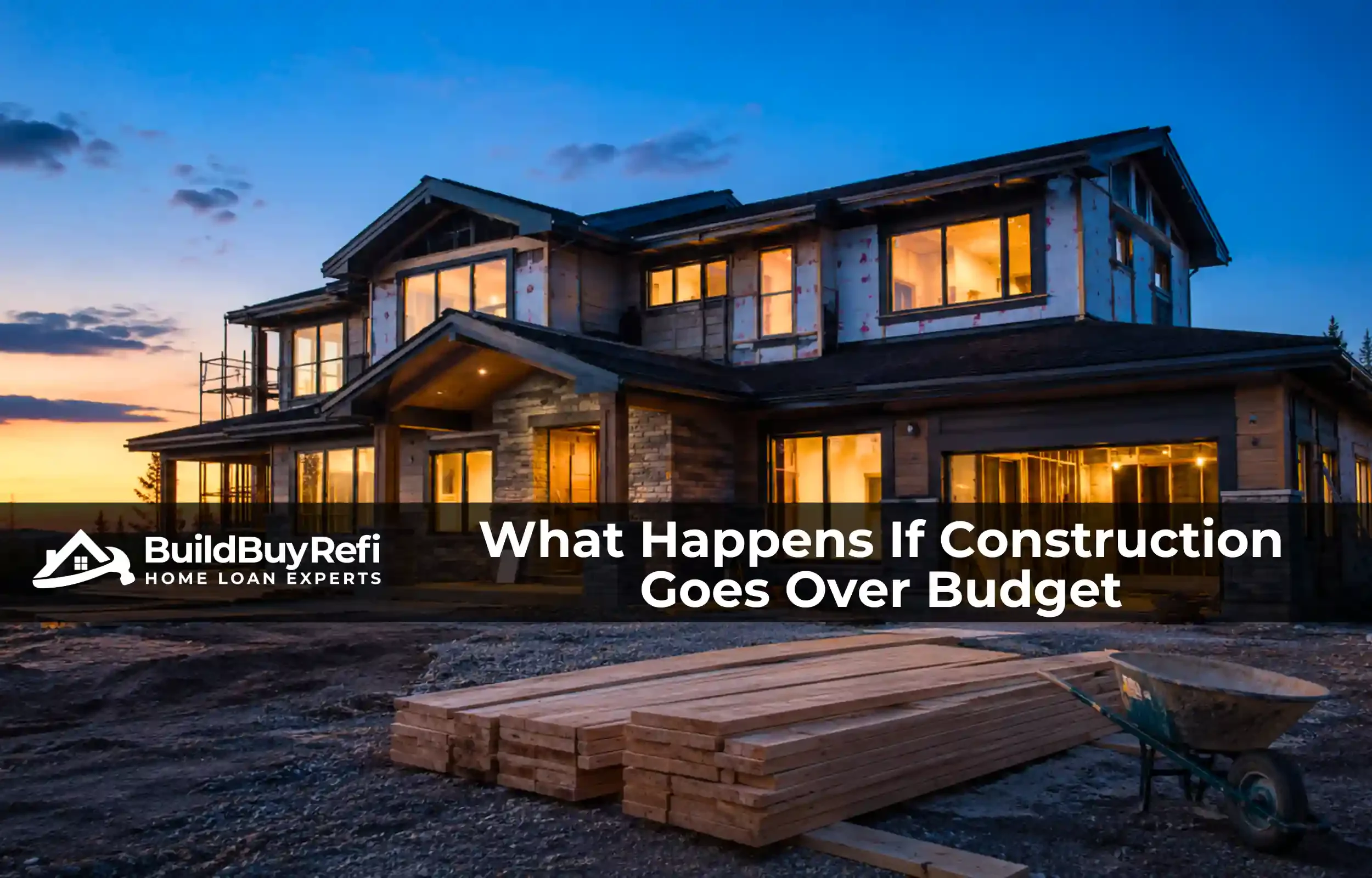
What Happens If A Construction Loan Goes Over Budget?
When a construction loan goes over budget, the fix comes from one of a handful of places, and the best one depends on your situation. You can tap the contingency reserve that was built into the loan. You can pay the difference in cash, as long as it does not wipe out the reserves you needed to qualify. You can pull back on the upgrades that caused the overage.
Or, if you qualify, you can bring in additional financing. For our borrowers that often means our own in-house consumer loan of up to $50,000 dollars, which lets you cover overages or upgrades without maxing out credit cards or stalling the build. The one thing no lender can do is hand you money above the home's appraised value, because that value sets the hard ceiling on the whole project.
That ceiling, and how much room you have under it, is the real story of every overrun. After years working across construction, renovation, manufactured, modular, FHA, VA, conventional, and USDA financing, I can tell you the budget rarely breaks because of a disaster. It breaks because of change orders, the nicer flooring, the upgraded fixtures, the finished basement you decide you want once you see the finishes in person.
What separates borrowers who solve an overrun from borrowers who get stuck usually comes down to two things: whether they are working with a direct lender who can actually take their file back and find room, or a broker who is gone the moment the loan funds, and whether they kept their credit and reserves intact during the build.
This guide walks through all of it, why projects go over, what your contingency is really for, how the appraisal caps your options, the funding routes available when you need more, and the mistakes that quietly take your best options off the table before you ever get to use them.
Budget overruns often start with fees nobody disclosed. These are the questions to ask any construction loan lender before you sign.
Why Construction Projects Usually Go Over Budget
In my experience, change orders are the single biggest cause of a construction project going over budget.
A borrower agrees upfront to a certain flooring type, cabinet level, appliance package, fixture allowance, and countertop selection. On paper, everyone is aligned. Then the house gets close to the finish stage, and the borrower starts seeing those finishes in real life. That is when many homeowners decide they want something nicer than what was originally planned.
That is where the budget starts breaking.
Change Orders Are the Real Budget Killer
A change order is any change to the original construction plan, scope, materials, or finishes that affects cost. Some are unavoidable. Many are completely optional, and that distinction matters.
There is a big difference between a cost increase caused by an unexpected site condition and one caused by the borrower deciding they now want more expensive finishes. Common optional change orders include:
Hardwood instead of carpet, often throughout the entire home
Upgraded appliances instead of the standard package
Higher-end flooring across the whole floorplan
Different light fixtures and upgraded door hardware
A better trim package
Finishing extra basement or bonus space
Stone, tile, or countertops above the original allowance
None of those choices are wrong. The problem is that every upgrade has to be paid for somewhere. A 5,000 dollar change here, a 12,000 dollar change there, and a 25,000 dollar basement finish add up to a much larger overrun than the borrower expected.
Why Site-Built Homes Are More Exposed Than Manufactured or Modular
Budget overruns happen far more often on site-built custom homes than on manufactured or modular homes, and the reason is simple. On a site-built home, you are choosing almost every item from scratch: flooring, cabinets, countertops, tile, plumbing fixtures, light fixtures, hardware, appliances, trim, paint, and exterior materials.
That level of customization is one of the biggest benefits of building, but it also creates far more opportunity for cost creep. Manufactured and modular homes can still be upgraded, but they usually come with a more defined menu of finishes and packages. Selecting from a controlled menu limits how far the budget can drift compared to customizing nearly every detail.
How the Contingency Reserve Actually Works
Most construction loans include a contingency reserve, which is extra money built into the budget to cover cost increases or unexpected needs during construction. A 5 to 10 percent range is common, though many loans sit closer to 5 percent.
This can be a very good thing, but borrowers need to understand what it is for.
What Contingency Is For
A contingency reserve is meant to help when materials cost more than expected, labor costs rise, site conditions require extra work, weather or delays create added expense, or something necessary was missed or underestimated. It is a safety net for the project, not a slush fund.
Why You Should Not Treat It Like Upgrade Money
The mistake I see most often is borrowers treating the contingency like free upgrade money. If you spend it early on cosmetic upgrades, there may be nothing left when a real construction issue surfaces later. A 5 to 10 percent cushion sounds like a lot at the start, but on a custom home it disappears quickly once you begin upgrading major finish categories. I would rather see that contingency protected for true overruns.
What Actually Happens When the Money Runs Out
This is where who you are working with matters enormously.
Broker Versus Direct Lender
If you used a mortgage broker to originate your construction loan, I have to be direct with you: once that loan funds, the broker is done. They have no relationship with the lender who ends up holding your loan. They cannot call anyone, they cannot get you more money, and they cannot take your file back to underwriting and make a case for you. You are on your own.
A direct lender is different. We hold our loans in house and we know your file. In certain cases, with strong compensating factors, we can take the file back to committee, look at whether you originally qualified for a higher amount, and work with the appraiser to find room. That option simply does not exist with a broker, and most borrowers have no idea until they need it.
When the Appraisal Becomes the Ceiling
Even a direct lender has limits, and the appraisal is the biggest one. The appraisal is done at the start based on the original plans. If you have already built at the top of what it supports, there is no room to add to the loan. No lender can finance value that is not there. At that point your options narrow to paying the overage in cash, removing upgrades, or doing them later once you have equity. The lender's core job is to make sure the home everyone agreed on gets built to completion.
Paying Out of Pocket and the Reserve Trap
If you have cash and want to pay for upgrades out of pocket, that can be an option. But it needs to be handled carefully.
You may have needed certain reserves to qualify for the construction loan in the first place. If you drain those reserves to cover upgrades, it can affect your financial position, your future qualification, and your ability to absorb another cost increase. Before paying cash, ask yourself whether it reduces reserves you needed to qualify, whether it creates a cash shortage later, whether the upgrade actually adds value, and whether it is something you could do after closing instead. Sometimes the smartest move is to build what was agreed to, close, and improve later.

Why You Should Not Touch Credit Cards During the Build
One thing I strongly caution every borrower about is using credit cards during construction.
It is tempting to think you will just put the upgrades on a card. That may solve the immediate problem, but it can create a much bigger financing problem later. Running up card debt during the build can lower your credit score, raise your monthly obligations, and damage your ability to qualify for additional financing or to refinance when the home is complete.
If you max out cards during the build, you can eliminate the very options that would have helped you, including the ability to qualify for an additional consumer loan, refinance the construction loan, or secure better terms. Keep your cards low, keep your credit clean, and give yourself every option.
Your Real Funding Options When You Go Over Budget
When construction goes over budget, the right answer depends on the loan program, your qualification, the appraisal, and the reason for the overrun. The realistic options include:
Using the contingency reserve
Paying out of pocket without draining the reserves you needed to qualify
Reducing or removing optional upgrades
Having the builder absorb or share part of the cost
Increasing the loan amount if you qualify and the value supports it
Delaying optional improvements until after closing
Using a separate consumer loan if you qualify
We also offer a consumer loan of up to 50,000 dollars that can help qualified borrowers cover additional needs without tying it directly to the home. That is often a far better solution than maxing out credit cards, since a maxed-out card hurts your score and creates problems later. But you still have to qualify, which is exactly why keeping your credit clean during the build matters so much.
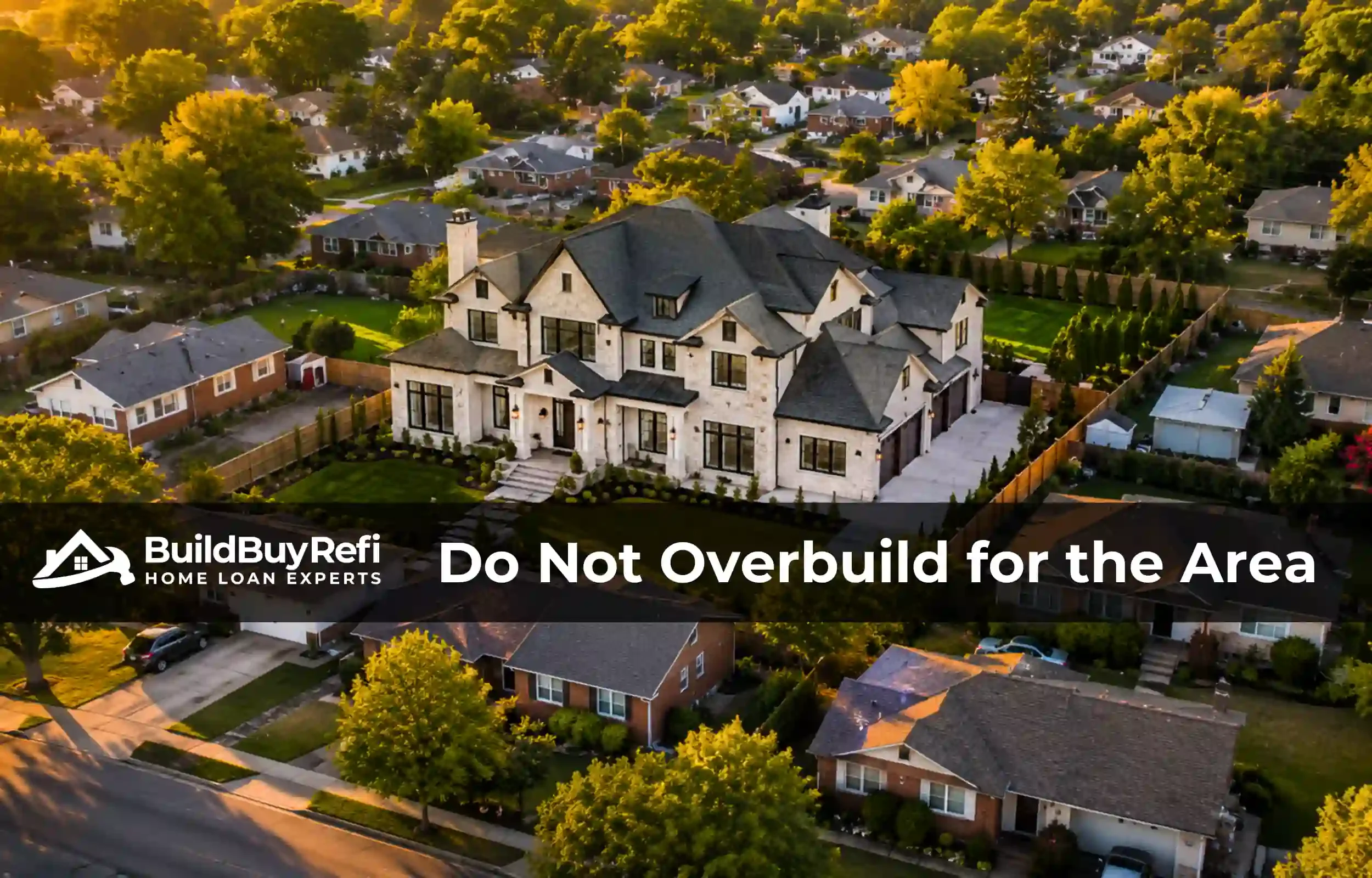
Do Not Overbuild for the Area
One of my strongest pieces of advice is to never overbuild for the neighborhood.
You can build a million-dollar home almost anywhere, but that does not mean it will appraise for a million dollars. If you build a million-dollar home where the comparable sales support 800,000 dollars, the appraisal can come in 200,000 dollars short, and that gap becomes your responsibility in cash. That is what overbuilding means, and it is dangerous because you may spend money you cannot finance and will not get back in value.
This is especially important on custom homes, rural properties, log homes, and barndominiums, where comparable sales are harder to support. Build the home you want, but build it for the market it sits in. A beautiful home can still be a financing problem if the numbers do not work.
How Refinancing Can Help You Recover Later
The way your original loan is structured can give you a second chance after the build, particularly through a streamline refinance.
On an FHA construction loan, you may be able to use an FHA Streamline Refinance once the home is complete. A streamline refinance is built to lower your rate and payment, and one of its biggest advantages is that it often does not require a new appraisal. That matters if you overbuilt for the area and the value is hard to support, because you can still refinance into a better permanent rate without the appraisal blocking you. It does not erase an overbuilding problem, but it removes one of the worst downstream consequences.
Veterans have a parallel tool. A VA construction loan can be exited with a VA IRRRL, the VA streamline refinance, which also typically skips the appraisal. If you are building with a VA loan, we cover that in detail on our VA construction resource, including how our in-house VA Hybrid Construction Loan is structured around that IRRRL exit. For most FHA and conventional borrowers, though, the FHA Streamline is the path worth understanding upfront. The lesson is the same either way: choose a lender who understands construction loans, not just standard purchase loans.

A Real Case Study: Flooring, Fixtures, and a $50,000 Dollar Solution
One real example involved a borrower building a 2,800 square foot home. The original plan called for vinyl wood-like flooring across about 1,400 square feet and carpet across the other 1,400. That was the agreed budget.
Later, the borrower decided they wanted hardwood across the full 2,800 square feet. Then they decided they did not like the nickel finish on the light and door fixtures and wanted a darker aged bronze look. Then they wanted to finish an additional 800 square feet in the basement.
The project blew past the contingency quickly. The bigger challenge was that the home was already near the upper end of what the appraisal would allow, so even though the borrower wanted the upgrades, we still had to deal with value, guidelines, and risk. We took the file back to committee and back through the appraisal side, squeezed everything we responsibly could, and helped the borrower with an additional 50,000 dollar consumer loan so they could afford the extras.
That worked because the borrower had not already damaged their credit with large card balances. If they had put those upgrades on credit cards first, they may have dropped their score enough to disqualify themselves from the very loan that saved the project. That is the lesson. Plan for what you really want upfront, and do not start swiping cards during construction without understanding the consequences.

The Questions to Ask Before You Ever Break Ground
Most borrowers spend weeks choosing countertops and almost no time vetting who will actually manage their loan. Before you sign, ask these.
First: are you the lender in control of the draws, and will you be with me from start to finish, or will this loan be sold to a third party I have never met? You may love your loan officer, but if they brokered your loan out, that relationship ends the moment construction starts.
Second: do you charge administration fees? High admin fees are a warning sign, not just a line item. They often represent the cost of involving outside parties and extra layers between you and the people making decisions about your loan, and they can inflate the total project cost in a way that hurts your appraisal. We charge no admin fees because we handle everything in house. When a lender charges high admin fees, ask where that money goes. The answer tells you who is really running your loan.
Plan the Real Budget Before You Build
The best time to control construction costs is before construction begins, not halfway through when flooring is about to be ordered or the basement is suddenly being finished.
Before signing the final contract, review the actual finishes, allowances, and specifications. Ask what flooring, cabinets, countertops, appliances, and fixtures are included, what happens if you select something above the allowance, how much contingency is available, and whether the appraisal supports the total project cost. Do not just look at the total contract price. Look at what that price actually includes. That is where most budget issues begin.
If you know you want hardwood throughout, price it upfront. If you know you want upgraded fixtures or a finished basement, price them upfront. If the numbers do not work upfront, they will not magically work later. A good construction plan should reflect the house you actually want to build, not the version that barely got approved.
Final Thoughts
Construction cost overruns are manageable when they are planned for, understood, and handled early. They become dangerous when borrowers assume they can upgrade everything later, spend the contingency without thinking, run up credit cards during the build, or ignore the appraisal limits of the area.
The mistake is almost never wanting nicer finishes. Most borrowers want the nicest home they can afford. The mistake is not planning for those finishes upfront and not choosing a lender who will actually be there when things get hard. Build the real budget before you build the house, and an overrun becomes a problem you solve rather than a crisis that follows you.
Frequently Asked Questions
How much will my construction loan go over budget on average?
There is no fixed average, because most overruns are driven by optional change orders rather than fixed costs. The size of the overrun usually tracks how many finishes a borrower upgrades after the budget is set. A contingency of 5 to 10 percent covers normal cost increases, but heavy upgrading can push a project well beyond that.
Can a lender increase my construction loan if I go over budget?
Sometimes, but only if you still qualify and the appraisal supports the higher value. A direct lender that keeps loans in house has more room to review your file and look for options than a broker, who generally cannot help once the loan funds. No lender can finance value beyond what the appraisal supports.
What is a construction loan contingency reserve?
It is extra money built into the project budget to cover unexpected cost increases during construction, commonly 5 to 10 percent. It is meant for true overruns like material increases, site conditions, and delays, not for funding optional upgrades.
Does an FHA Streamline Refinance require a new appraisal?
An FHA Streamline Refinance often does not require a new appraisal, which is one of its biggest advantages. If you overbuilt for the area and the value is difficult to support, you may still be able to refinance into a better permanent rate without the appraisal becoming a roadblock.
Should I use credit cards to cover construction overruns?
I strongly advise against it. Running up card balances during a build can lower your credit score and hurt your ability to qualify for additional financing or to refinance the construction loan later. A consumer loan at a favorable rate is almost always a better path, but you have to keep your credit clean to qualify for one.