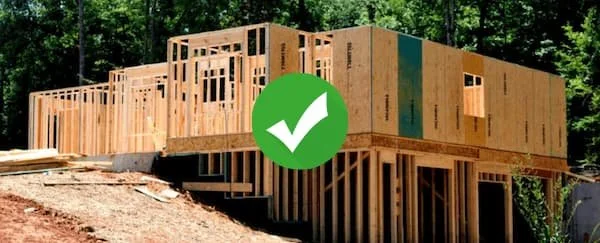
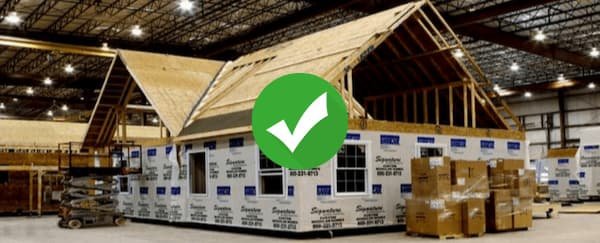
BuildBuyRefi-FHA-VA-OneTimeCloseConstruction-HomeLoans-3-New.jpg

FHA, VA, & Jumbo Construction Loans: One-Time Close, Two-Time Close & Hybrid Programs Up To $4.5MM

FDIC-insured direct lender offering nationwide in-house underwriting. Up to 100% financing for primary, second home, and investment construction, including Conventional and specialty programs for modular, manufactured, 3D-printed, and custom homes.

Image of 5-Star Review Rating for buildbuyrefi.com Image of customer headshots representing 3000+ recommendations for buildbuyrefi.com Image of Zillow FaceBook Google Trustpilot and Top Rated Reviews for buildbuyrefi.com
 

Written by the BuildBuyRefi Construction Lending Team
Powered by The Federal Savings Bank | NMLS #411500
Last Updated: March 30, 2026

FDIC Insured, Veteran-Owned Direct Construction Lender In All 50 States

No Hidden Administrative Fees. Never Brokered. The Same Team From Start to Final Draw.

Whether you are just starting to explore building options, already have your land under contract, or are days away from breaking ground, the lender you choose will shape the entire experience. Not every company advertising construction loans is actually a construction lender. Many are correspondents and brokers operating under a lender's name, competing for your attention with teaser rates that look attractive until you read the fine print.

What those advertised rates rarely disclose are the administrative fees stacked underneath them: origination overlays, processing markups, file setup charges, and bundled third-party service fees that can add $40,000 to $100,000 or more to your total cost. When those fees are factored into the actual cost of borrowing, the effective APR on many of these loans lands well above what the rate suggested, often between 8 and 9 percent, regardless of what was advertised.

There is another risk that does not get talked about enough. Construction loan appraisals are based on the completed value of your home. When lender fees are embedded in the loan amount, that inflated total frequently pushes past what the property can appraise for. At that point you are either coming out of pocket to cover the gap, sometimes tens of thousands of dollars, or you are walking away from the build entirely. That is not a hypothetical scenario. It is one of the most common ways borrowers lose time, earnest money, and the home they planned to build.

Beyond the fee structure, there is a continuity problem that matters just as much. Many of these arrangements involve a hand-off after closing. The lender who qualified you passes your construction draws to a third-party management team you have never spoken with. If a problem emerges mid-build, or your project needs a timeline extension, you are working with people who were not part of your original transaction.

We are a federally chartered, FDIC-insured bank. We originate, underwrite, fund, draw-manage, and permanently convert every construction loan entirely in-house. No administrative fee layers buried in the loan structure. No third-party draw teams. The same banker who opens your file stays with you through every phase, including extensions when your build timeline requires one.

We offer Conventional, FHA, and VA construction programs alongside our in-house Jumbo options, and our Hybrid Construction Loan is the strongest structure we have brought to market for borrowers who want rate flexibility paired with construction financing depth.

Ask our team whether you qualify for an additional $50,000 before or after closing, available on eligible scenarios.


What do hidden administrative fees actually cost you?
$500,000
$60,000
Total you are financing
$560,000
Fees as % of loan
12.0%
Amount that builds nothing
$60,000
Broker with High Admin Fees
Your build budget$500,000
Admin fees added$60,000
What you owe at close$560,000
Required appraisal value$560,000
Likely appraised value$500,000
Cash gap at closing$60,000
Our Bank, No Admin Fees
Your build budget$500,000
Admin fees added$0
What you owe at close$500,000
Required appraisal value$500,000
Likely appraised value$500,000
Cash gap at closing$0
You may need to bring cash to close, or walk away
With $60,000 in admin fees embedded in this loan, the lender requires your home to appraise for $560,000. Most appraisals reflect actual build cost, not the lender's fee stack. If the appraisal comes in at $500,000, you face a $60,000 shortfall. That money must come from you at closing, or you forfeit the project.

Questions to ask any lender before you commit:

  • Are there any administrative, processing, or program fees beyond standard origination?
  • Will my loan be underwritten, drawn, and serviced by your institution or passed to a third party?
  • Who manages my construction draws and inspections after closing?
  • What happens if my project needs a timeline extension?
  • Will the same team that opened my file be available throughout the build?
Check My Eligibility

This calculator is for educational purposes only and illustrates how administrative fees affect total loan cost and appraisal requirements. It does not constitute a loan estimate, rate quote, or commitment to lend. Contact a licensed loan officer to discuss your specific scenario.

This guide is intended for educational purposes to help you understand construction financing options and evaluate what structure may fit your scenario.


About the Authors

Written by the BuildBuyRefi Construction Lending Team
Powered by The Federal Savings Bank | NMLS #411500

This guide was created by the active construction lending team at BuildBuyRefi in partnership with The Federal Savings Bank. Our authors bring 15–30 years of combined experience originating, underwriting, and managing construction loans across all 50 states.

Each contributor has direct, hands-on experience with the full range of construction programs covered in this guide, including site-built, modular, manufactured, barndominium, ICF, SIP, jumbo, VA, FHA, ITIN, and investment construction scenarios.

All content reflects real, in-house lending programs and first-hand experience, not third-party research or aggregated information.

Compliance & Review

Reviewed by The Federal Savings Bank Compliance and Lending Team
NMLS #411500

All content is reviewed for accuracy and updated upon material program or market changes.

Last Updated

March 30, 2026
Next Review: Upon material program change or quarterly


293039_BBR Vector Graphic PNGS7mall_101618.png

What makes a construction loan different from Other mortgage Types?

A construction loan is not a purchase loan with a longer timeline. It is a completely different financing structure, one that funds a home that does not yet exist, manages money in stages as the build progresses, and requires a lender who understands every phase from land acquisition through final inspection.

Most banks and online lenders do not originate construction loans directly. They refer them out, broker them to investors, or offer a single product with no flexibility for your specific scenario. The result is a borrower who qualifies on paper but ends up with the wrong structure, the wrong timeline, or a fee stack they did not see coming.

As a federally chartered, FDIC-insured direct lender, we underwrite, fund, and manage every construction loan entirely in-house across all 50 states.

293039_BBR Vector Graphic PNGS4small_101618.png

Why this guide is different.

Most construction loan content online is written by marketers, aggregators, or lead generation sites without direct lending authority behind it.

This guide is built from real construction loans actively originated, underwritten, and managed in-house by our construction lending team at BuildBuyRefi, a direct lender powered by The Federal Savings Bank.

Our goal is simple. Help you understand how construction financing actually works, what impacts your total cost, and how to structure your loan correctly before you commit.

We offer One-Time Close, Two-Time Close, and Hybrid construction programs for primary residences, second homes, investment properties, and ADUs across Conventional, FHA, VA, and Jumbo scenarios up to $4.5 million.


Our In-House Construction Loan Program Highlights

  • 640 minimum credit score required

  • Conventional, FHA, VA, Portfolio, and USDA Alternative Options available.

  • Conforming, High-Balance, and Jumbo construction now available up to $4.5 Million.

  • Single Family, Multi-Family, Primary Residence, 2nd Homes, Investment Construction Loans, and Accessory Dwelling Units (ADU) are eligible.

  • Available in all 50 states. (Manufactured is not available in New York, all other property types are.)

  • Up to 100% VA Construction loan program for Veterans. (Available on our hybrid, and two-time close program, offering great low construction rates and no fees on second loan closing.)

  • NO Re-qualification once construction is complete.

  • No re-appraisal on government options; only one appraisal is completed as if the home were built.

  • Land equity can be used as a down payment if owned or purchased simultaneously.

  • The land you own with a loan balance will be paid off and rolled into the loan.

  • Our construction loan is fully in place before we break ground.

  • Complete inspections at each draw ensure your build is going as planned—and stays aligned with local building and zoning codes—before payments are made to the builder.

  • Builder is never paid for incomplete work, designed to protect you, the customer.

  • Attractive Fixed rate and interest-only terms are available.

  • Builders, Manufactured, Modular, and System Built Home Dealers can offer seller concessions, rolling in the closing costs.

  • Learn about what happens if you may require a construction loan extension.

  • Qualified borrowers may access up to *$50,000 before, at, or after closing, to use the funds as they wish.

  • No Self-Build, Family Builders, or acting as your own contractor for any of our construction or renovation programs.


VA Construction Loan Market Update: What Changed and What It Means for Veterans Building Today

The traditional VA One-Time Close construction loan has been suspended by the majority of investors and lenders nationwide as of May 2025. Tightened secondary market guidelines and increased investor risk exposure have made the product largely unavailable through conventional lending channels.

That context matters, but not for the reason most borrowers assume.

The more consequential issue is what was happening before the suspension. Many VA One-Time Close programs had accumulated administrative and investor fee layers that bore little relationship to the actual cost of originating and managing the loan. Total added costs frequently exceeded $50,000, which directly compressed appraisal outcomes and reduced the financing benefit veterans were supposed to receive. The 100% VA headline was real. The cost structure behind it often was not.

Why Our Hybrid Construction Loan Delivers a Better Outcome for Most Veterans

At BuildBuyRefi, our response to the OTC market's deterioration was not to patch an existing product. We built the Hybrid Construction Loan as a purpose-designed in-house structure that solves the core problem veterans faced: how to get a streamlined build experience without locking into an unfavorable cost and rate structure from day one.

The Hybrid addresses both the construction phase and the permanent phase at the outset. Both sets of loan documents are handled upfront, which creates a build experience that operates much like a One-Time Close operationally. You are not managing two completely separate loan events. You are not navigating a second full origination at the end of construction.

At the same time, the Hybrid preserves the rate flexibility and program advantages that make the Two-Time Close structure strategically superior for government program borrowers. If permanent rates move favorably during your build, you are positioned to capture that improvement. And because VA streamline refinance (IRRRL) is available on the permanent loan in qualifying scenarios, capturing a rate improvement in-house does not require a new appraisal, a new full origination, or the documentation burden of a conventional refinance.

What Our In-House VA Construction Programs Offer

Our VA construction solutions are underwritten, funded, and managed entirely in-house. No third-party investors. No correspondent hand-offs. No administrative fees on any of our construction programs.

For eligible veterans in qualifying scenarios, our VA Hybrid and Two-Time Close structures offer:

  • Up to 100% VA construction financing

  • No administrative fees on any program

  • VA IRRRL streamline refinance eligibility on qualifying permanent loans, with no new appraisal required

  • In-house draw management and construction disbursements from start to completion

  • One dedicated banker guiding the file through every phase, with no handoffs

The VA funding fee is assessed on the permanent end loan, not during the construction phase.

The Bottom Line for Veterans Comparing Options Today

A veteran building today through our in-house VA Hybrid or Two-Time Close structure often achieves better total financing economics than the traditional VA One-Time Close delivered, even when it was available. The suspension of the OTC program has not removed what our VA construction programs provide. It has removed a product that was frequently more expensive and less flexible than the alternatives we already offered.

The right question to ask any VA construction lender is not which label they use. It is whether the loan is in-house, who manages the draws, what the actual total fees are, and what happens to your rate when the build is complete.

All programs are subject to change without notice based on market conditions and investor guidelines. Contact a construction loan specialist for current program availability and qualification guidance specific to your scenario.

How Do I Qualify for a Construction Loan With BuildBuyRefi?

Before reaching out to a construction loan specialist, a quick self-assessment can help clarify whether your scenario is a strong fit for one of our programs. Most borrowers who move forward share a common set of starting conditions. Work through the five statements below and note where your situation lands.

This is not a formal application. It is a directional pre-check designed to help you understand what matters before the first conversation.

(1) You plan to build on land you own or will own at closing.

Our construction loan programs require that the land be titled in the borrower's name, either through current ownership or through a simultaneous purchase that closes with the construction loan.

If you already own land free and clear, that equity may reduce or eliminate your down payment requirement in eligible programs. If the land carries an existing lien, we can pay it off at closing and roll it into the loan.

If you are still identifying land, that is not a barrier to starting the conversation. Many borrowers finalize their land selection during the pre-qualification process.

Land that is owned by a third party and not being transferred to the borrower is not eligible. Situations involving family land gifts or informal arrangements require a formal title transfer, survey separation, and confirmation before the loan can proceed. We can help direct you through that process.

(2) You are building one of our eligible home types.

Our programs cover a wide range of construction scenarios, including site-built single-family homes, manufactured homes, modular homes, barndominiums, log cabins, concrete block homes, steel and metal frame homes, SIP panel homes, ICF insulated concrete homes, 1-4 unit multi-family, second homes, investment properties, and accessory dwelling units.

Property types that are not eligible for our programs include: earth contact homes, geodesic domes, container homes, tiny homes, shop homes (shomes), A-frames, mixed-use properties, and commercial projects.

Self-build, owner-as-general-contractor, relative-built, employer-built, and self-contracted builds are not permitted under any program. A qualified, approved builder is required.

(3) You do not have the large down payment traditional construction lenders require.

Many conventional construction lenders require 20% or more down before they will consider a file. Our programs are structured differently. VA-eligible borrowers can access up to 100% financing in qualifying scenarios. Borrowers using land equity may meet down payment requirements without bringing additional cash to closing. Conventional and FHA programs carry their own requirements, but they are generally accessible at lower thresholds than what a typical bank or portfolio lender demands.

(4) You want to qualify once and avoid multiple closings.

A traditional construction sequence involves separate closings for land acquisition, construction financing, and the permanent take-out loan. Each closing carries its own qualification requirements, appraisal, underwriting review, and closing costs. That is three separate approval events where employment changes, credit shifts, rising rates, or tightening guidelines can affect your eligibility.

Our One-Time Close program requires a single qualification, a single appraisal, and a single closing. At build completion, the loan converts to permanent financing automatically without re-qualification. Our Hybrid Construction Loan offers a similar single-closing structure with different rate timing, which may fit some borrowers better depending on build length and rate strategy. And we have two-time close construction loan for unique program types and certain portfolio products.

If you are uncertain which structure fits your scenario, our excellent team of construction bankers will walk you through making the correct decision in detail.

(5) You are committed to staying actively engaged throughout the process.

Construction lending requires more borrower involvement than a standard purchase or refinance. From pre-qualification through permanent conversion, your responsiveness, documentation accuracy, and communication directly affect your timeline and outcome. Rate locks are real financial instruments with expiration dates. Build phases require timely draw requests and inspection coordination. Borrowers who treat the process as passive tend to encounter delays and added costs.

If you can stay engaged and work with your loan officer as a partner throughout the process, that is one of the strongest indicators of a smooth build.

What Your Answers Mean

If all five of these statements reflect your situation, you are well-positioned to start a formal pre-qualification conversation with one of our construction loan specialists.

If one or more of them does not fit your current scenario, that does not automatically remove you from consideration. It identifies where your file needs attention before the process moves forward. A direct conversation with a specialist is often the most efficient way to determine what is addressable and what is not.

Check My Eligibility or call to speak with a construction loan specialist about your specific scenario.

What Can I Expect Regarding Pre-Qualification, Closing Speed, and Pricing?

No lender can guarantee pre-qualification, a specific rate, or a closing date before a complete file has been reviewed, underwritten, and all conditions cleared. Any lender making those guarantees before seeing your full documentation is not being accurate with you, and that lack of accuracy tends to create problems later in the process.

What we can tell you is what factors are in your control, how those factors affect your outcome, and what you should expect once the process begins.


Pre-Qualification Is a Starting Point, Not a Commitment

Pre-qualification establishes that your scenario appears eligible based on the information reviewed at that point in the process. It does not guarantee that the program, rate, or terms you were pre-qualified for will remain unchanged through closing.

Final qualification depends on complete documentation, a full underwriting review, appraisal results, title findings, builder approval, and current program guidelines. From pre-qualification to closing, the loan file must satisfy every one of those conditions. Borrowers who understand this early are better positioned to manage the process proactively.


Four Factors That Affect Pricing and Closing Timeline

Construction lending operates across a longer timeline than a standard purchase mortgage. From application through permanent conversion, the window can span 12 to 18 months. Over that period, four factors have a direct and material impact on the rate and terms you receive.

Rate Locks Have Expiration Dates

A rate lock reserves specific pricing for a defined period. Shorter lock windows typically carry more competitive pricing, but they require faster execution from both the borrower and the builder. Locks that expire add real cost. In environments where rates are rising, a re-lock can price meaningfully higher than the original lock. Once you are pre-qualified, returning documentation promptly, staying engaged, and keeping your builder on schedule are the most direct actions you can take to protect your locked pricing.

Program Availability Can Change

Loan programs are subject to investor guideline changes, market conditions, and institutional decisions that are outside any lender's control. Programs that are available when a borrower applies can be discontinued, restricted, or modified before closing. This is not common, but it has happened in this market. Moving efficiently from pre-qualification to closing is the most reliable protection against this risk.

Employment and Income Changes Affect Eligibility

Construction lending requires stable, fully documentable income from application through permanent conversion. Employment changes, including positive ones such as promotions, career shifts, or transitions to self-employment, create re-underwriting requirements that do not typically apply in standard purchase transactions. Any change in income or employment status should be disclosed to your loan officer before it happens, not after. Undisclosed changes discovered during final underwriting are one of the most disruptive and avoidable problems we see.

Credit Changes During the Process Can Require Re-Qualification

New credit accounts, missed payments, significant balance increases, or new collections filed during the construction loan window can trigger a full re-underwrite. In some cases they result in a change to program eligibility, pricing, or loan denial. From application through permanent conversion, treat your credit profile as a stability asset that requires active maintenance. Do not open new accounts, co-sign for others, or allow anything to go delinquent during this period.


What You Can Do to Put Yourself in the Best Position

Working with a lender who has in-house underwriting, in-house draw management, and a registered builder network reduces the number of external variables that can slow your file. When the underwriting, builder review, and draw process all run through the same institution, there are fewer handoffs where delays are introduced.

Beyond choosing the right lender, the factors most directly in your control are the completeness and accuracy of your documentation, your responsiveness once the process begins, and the experience and preparedness of your builder. Borrowers who return items immediately, communicate proactively, and work with a builder already registered in our network consistently close faster and with fewer complications than those who do not.

A direct conversation with a construction loan specialist is the clearest way to understand where your scenario stands and what you should prepare before the process begins.

Check My Eligibility or call to speak with a construction loan specialist about your specific scenario.

What Construction Programs, Property Styles, & Occupancy Types Are Allowed Through BuildBuyRefi.com?


Eligible Occupancy Types Allowed

Owner Occupancy Allowed:

  • Single Family

  • Multi-Family

  • 2nd Home

  • Investment Properties (certain property styles not allowed under investment, please check with your banker on our team)

Construction Property Styles

Most construction lenders limit their programs to traditional stick-built homes. BuildBuyRefi finances a substantially broader range of construction types, including specialty builds that require program depth, registered builder relationships, and appraiser familiarity that most generalist lenders have not developed. Review the categories below before planning your build to confirm your property style is eligible under our programs.


Site-Built Property Styles Allowed

Site-built homes are constructed entirely on-site using conventional or specialty building methods. These are the most widely recognized construction types across all lending programs. All styles listed below are eligible under qualifying programs with an approved, licensed general contractor.

  • Brick Traditional brick construction is eligible across all programs as a primary exterior or structural building method.

  • Concrete Block Concrete block construction is eligible under all programs when built to standard residential specifications on a qualifying foundation.

  • Earth Contact Earth contact homes are eligible in markets where qualifying comparable sales exist to support the as-completed appraised value. Confirm comparable availability in your area with your construction specialist before planning.

  • Frame Wood frame construction is the most common residential building method in the country and is eligible across all programs. Frame homes include ranch slabs, walkouts, two-story, and split-level configurations.

  • Stone Stone construction, whether full stone or stone veneer over frame, is eligible under qualifying programs.

  • Stucco Stucco construction is eligible under all programs as a primary exterior finish system over frame or block.

  • 3D Printed 3D printed residential construction is evaluated on a case-by-case basis under site-built eligibility standards. Key considerations include local permitting infrastructure, foundation type, and appraiser experience with the method in the subject market. Speak with a construction specialist early to confirm eligibility in your area.

  • ICF (Insulated Concrete Form) Insulated Concrete Form construction is poured on-site and is classified as site-built construction under all programs. ICF delivers superior energy performance and structural integrity. It is eligible when built to standard residential specifications on a qualifying permanent foundation. Registered ICF builders are available in active markets nationwide.


BuildBuyRefi.com Manufactured Home Loan Lender

Factory-Built, Kit-Style, and System-Built Properties Allowed

These property types are built off-site, assembled on-site, or constructed using specialized systems. All are eligible under qualifying programs with an approved builder or dealer.

  • Barndominium, Metal Frame, and Steel Frame Homes Barndominiums and metal or steel frame homes are financed as permanent residential construction under eligible programs. The home must be built on owned land with proper zoning, foundation, and permitting. Registered barndominium and metal frame contractors are available in active markets nationwide.

  • Log Cabins Log cabin construction is eligible when built by an approved contractor with proper plans, permitting, and a qualifying permanent foundation. Appraiser familiarity with the construction method in the subject market is required. Your construction specialist can help confirm comparable availability in your area.

  • Manufactured Homes (Doublewide, Triplewide, Quadruple Wide, and Duplex Style) Manufactured homes from a dealer of your choice are eligible for placement on land you own or land you are purchasing simultaneously. The home must be permanently affixed to a qualifying foundation, fully converted to real estate under ALTA 7.1 title standards, and meet a minimum size of 600 sq. ft. Interest-only payments during the construction period are available. One-Time Close and Two-Time Close structures are both offered for eligible manufactured builds.

We do not finance manufactured homes placed on land you do not own, including mobile home parks, rented lots, leased land, or family-owned land where the home must be affixed to property not in your name.

New From Dealer manufactured home loans are not available in New York. Modular and site-built construction is available in all 50 states.

  • Modular Homes (All Styles) Modular homes are treated identically to traditional site-built single-family homes under every program we offer. They are not classified as manufactured homes, are not issued a VIN, and are not subject to manufactured home guidelines. Every financing option available for a stick-built home extends to modular, including across all 50 states and New York. Modular construction is built in climate-controlled factory conditions, which reduces weather-related delays and often delivers stronger build quality and faster completion timelines compared to on-site construction. You can select a builder from across the country, order your home, and have it delivered, installed, and set up under this program.

  • New Foam Construction New foam construction is eligible under our programs when built to standard residential specifications and permanently affixed to a qualifying foundation.

  • SIP Panel (Structural Insulated Panel) SIP panel construction is eligible under our programs when built to standard residential specifications and permanently affixed to a qualifying foundation. Registered SIP builders are available in active markets nationwide.

  • Timber Frame Timber frame homes are eligible when built by an approved contractor with proper plans, permitting, and a qualifying permanent foundation. Appraiser familiarity with the construction method in the subject market is a factor your construction specialist can help navigate.

  • Accessory Dwelling Units (ADU)


Ineligible Property Types

The following property types are not eligible under any current program.

  • A-Frames

  • Commercial Projects

  • Container Homes

  • Geodomes

  • Mixed-Use Properties

  • Mobile Homes not permanently affixed to a foundation and not taxed as real property

  • Off-Grid Homes lacking utility access or adequate comparable sales support in the subject market

  • Shomes (Shop-Home Combinations)

  • Tiny Homes (under 600 sq. ft.)

  • Yurts, floating structures, and other non-permanent residential structures

Note on Self-Build: No program permits the borrower to act as their own general contractor, serve as the builder of record, or use a relative or employer as the builder. All construction must be performed by a lender-approved, licensed builder or general contractor.


Construction Loan Programs Available for Your Build

Choosing the right construction loan program depends on your borrower status, location, loan amount, and what you are building. The property styles listed above are eligible across multiple program types. Understanding which program fits your scenario before you start planning saves time and prevents misaligned expectations at closing.


Conventional and FHA Construction Loans

Conventional and FHA construction loans are among the most utilized programs available for ground-up residential builds. Both are offered as One-Time Close and Two-Time Close structures, giving borrowers flexibility in how the construction and permanent financing are handled.

FHA construction loans are backed by the Federal Housing Administration and are designed to extend access to borrowers with lower credit scores, higher debt ratios, and smaller down payments. FHA loans carry mortgage insurance that does not automatically drop off when the loan balance falls below 80%. Borrowers who want to remove mortgage insurance will need to refinance out of the FHA loan after construction is complete.

Conventional and FHA construction loan amounts are subject to county-level loan limits. If your build cost exceeds conforming limits for your county, a Jumbo construction option may apply.

The FHA 203K Renovation Loan is also available as a construction-adjacent program for borrowers purchasing a fixer-upper or updating an existing home, depending on the scope of work and eligible property type involved.


VA Construction Loans: Up to $1.5 Million Standard, Up to $3 Million with In-House Exception

Our VA construction programs are the strongest financing option available for eligible veterans and their spouses. Up to 100% financing with no mortgage insurance requirement applies, and every loan is underwritten, funded, and draw-managed entirely in-house through The Federal Savings Bank.

Most lenders who advertise VA construction financing cap out at $1 million, if they offer the program at all. We regularly close VA construction loans up to $1.5 million under standard program parameters. For veterans building homes that require financing above $1.5 million, we offer an in-house exception pathway up to $3 million. That exception review is handled by our internal loan committee, which evaluates compensating factors specific to your file. These exceptions are reviewed efficiently and are approved in the majority of cases where the borrower profile supports them.

That gap between what most VA lenders offer and what we offer is not a minor distinction. For veterans building in higher-cost markets, on larger land tracts, or with custom construction plans that push past conventional VA loan ceilings, the difference between a $1 million cap and a $3 million exception pathway is the difference between building the home you want and scaling back the project entirely.

VA construction loans carry no income restrictions and no geographic restrictions, though DTI requirements apply. Borrowers must work with a VA-approved builder who meets construction standards and inspection guidelines. VA loans also allow financing for larger land tracts and carry certain exception allowances not available under Conventional or FHA programs.

Comparing VA and FHA for your build? Review our FHA vs VA construction loan comparison for a full program-by-program breakdown.


One-Time Close, Two-Time Close, and Hybrid Construction Loans

Our One-Time Close and Two-Time Close programs are among the most requested construction structures we offer. Both eliminate the traditional three-loan model that required separate financing for land, construction, and the permanent mortgage.

In a One-Time Close, the land purchase, construction period, and permanent financing are combined into a single closing event. Your final rate is addressed at that closing, which protects you from rate movement during the build without requiring a separate refinance at completion.

In a Two-Time Close, the construction loan and the permanent loan are two separate transactions. This structure gives borrowers the ability to negotiate the permanent rate at the point when construction is finishing, which can be advantageous when market rates have moved favorably during the build period.

Our Hybrid Construction Loan was developed in-house to solve the problem borrowers face when choosing between the simplicity of a One-Time Close and the rate flexibility of a Two-Time Close. The Hybrid addresses both the construction and permanent loan documentation upfront in a near-single-close experience, while preserving the ability to optimize the permanent rate as the build completes. It is also eligible for FHA and VA streamline refinancing on the permanent loan in qualifying scenarios, which means borrowers can capture rate improvements in the future without a full new loan process. The Hybrid is only available through direct lenders who build and operate their own programs in-house. It cannot be replicated by a broker or correspondent lender.

All three structures are available for site-built, modular, manufactured, barndominium, and most specialty property types listed above. A minimum 640 credit score applies to most Conventional and FHA construction programs.


BuildBuyRefi.com | The Federal Savings Bank | NMLS #411500

BuildBuyRefi's Construction Loan Structure Comparison

One-Time Close, Two-Time Close, and Hybrid each serve a different borrower scenario. Use this table to identify which structure fits your build.

Scroll to see all columns →

Feature One-Time Close Two-Time Close Hybrid Construction Loan
Number of Closings 1 2 1 (structured)
Rate Locked at Closing Yes No Flexible
Ability to Capture Lower Rates Later No Yes Yes
Re-Qualification Required No Yes No
Second Closing Costs None Applies None
Complexity Lower Higher Moderate
Best For Simplicity and rate certainty Rate optimization if rates fall Balance of simplicity and rate flexibility

© BuildBuyRefi.com, powered by The Federal Savings Bank, NMLS #411500. Program availability subject to eligibility. Rate structures vary by loan type and borrower qualification. Speak with a construction loan specialist to determine which structure fits your specific scenario.


USDA Construction Loan Alternatives

The USDA construction loan has been discontinued by most lenders, and we no longer offer it as a standalone program. Income limits and restrictive debt ratio requirements made it difficult for most borrowers to qualify, and investor availability for this product has significantly declined across the industry.

For borrowers who were drawn to the USDA construction program primarily because of its zero-down structure, our programs are designed to fill that gap through land equity application. Borrowers who own their land free and clear, or who have built meaningful equity in their land, can apply that value toward the loan-to-value calculation. In qualifying scenarios, this eliminates or substantially reduces the cash down payment required at closing without requiring a government rural development program to achieve it.

If you own land or are purchasing land as part of your build, speak with a construction specialist about how land equity may reduce or eliminate your out-of-pocket requirement for your specific scenario.


Portfolio Construction Loans: Jumbo, ITIN, 2nd Home, and Investments

Most construction lenders restrict their programs to primary residence borrowers with Social Security numbers building conventional site-built homes within conforming loan limits. BuildBuyRefi operates four portfolio construction programs that serve borrower scenarios the majority of lenders in the country do not accommodate at all.


Jumbo Construction Loans Up to $4.5 Million

Jumbo construction financing is available for borrowers whose build costs exceed conforming loan limits, including high-value primary residences, second homes, and custom builds that require loan amounts no agency program can accommodate. Most construction lenders stop well short of the loan sizes we offer, and many who do offer jumbo construction broker the file out to a third party. Our Jumbo construction programs are underwritten, funded, and managed entirely in-house through The Federal Savings Bank.

We offer both a One-Time Close and a Two-Time Close structure for Jumbo construction, with financing available up to $4.5 million for eligible borrowers. A minimum 720 FICO score is required across all Jumbo construction programs. The Two-Time Close Jumbo program is available for primary residences and second homes. The One-Time Close Jumbo program is available for primary residence construction only.

Loan amounts above the standard conforming limit are eligible regardless of geography, meaning borrowers in non-high-cost counties are not excluded from Jumbo construction access based on location alone. The acreage limit for Jumbo construction is 30 acres, with exception requests reviewed by Construction Department Leadership.

The Two-Time Close Jumbo construction term is a fixed interest-only period of up to 12 months, followed by a rate and term refinance into a fully amortizing Jumbo end loan at completion. Borrowers on the Two-Time Close Jumbo program have the option to extend the construction term for 6 months at no cost and with no change to the rate, provided the borrower is current on the construction loan and requests the extension in advance. This extension provision is a meaningful program feature for borrowers managing complex builds where timelines extend beyond the initial projection.

The One-Time Close Jumbo construction term is a fixed interest-only period of up to 18 months, structured as a portfolio ARM product that automatically converts to permanent financing at construction completion without a separate refinance transaction.

Reserve requirements are tiered by loan size. Borrowers financing up to $2 million require 12 months PITIA in reserves. Builds between $2 million and $3.5 million require 24 months. Builds between $3.5 million and $4.5 million require 36 months. Loan amounts at $4.5 million require 40 months PITIA in reserves. Borrowers with loan amounts above $3 million are required to maintain a TFSB bank account with a minimum balance of $50,000. Loan amounts above $2.5 million require Credit Committee review.

Land equity is applied toward the qualifying LTV in eligible scenarios under specific conditions. Where the lot has been owned by the borrower for at least one day prior to construction loan closing and the LTV exceeds the loan-to-cost by 10% or more, the appraised value may be used as the qualifying LTV basis in lieu of total cost to build. Alternatively, borrowers who deposit 10% of the as-completed value into a TFSB Value Checking account held during construction may also qualify under the appraised value basis. In all other scenarios, the qualifying LTV is based on the lesser of the appraised value or the total cost to build including hard costs, soft costs, land, and closing costs.

A Jumbo Renovation program is also available for borrowers looking to finance a major renovation of an existing single-family residence, including tear-down and rebuild scenarios, for primary residences and second homes up to $4.5 million.

No manufactured homes are eligible under any Jumbo construction program. No 2-4 unit properties are eligible under the One-Time Close Jumbo structure. Barndominiums built as site-built construction are eligible under the One-Time Close Jumbo program. The borrower may not act as their own general contractor under any Jumbo construction program.


ITIN Construction Loans

Our ITIN Construction Loan program is a One-Time Close, ground-up construction program for primary residence borrowers who file taxes using an Individual Taxpayer Identification Number. We are one of the only direct construction lenders in the country offering this program in-house.

ITIN borrowers are not required to have a Social Security number to qualify. The ITIN card or letter combined with one additional qualifying form of identification is the acceptable identification standard. Eligible forms of ID include a passport, national ID card, foreign or U.S. driver's license, U.S. state identification card, visa, Mexican Matricula Consular Card, and others. Co-borrowers with Social Security numbers are permitted on the loan.

A minimum 680 middle FICO score is required. The program is available for single-family primary residence construction only, with a maximum of 5 acres and loan amounts up to the FHFA standard conforming limit. Income documentation follows full verification standards including two years of signed tax returns with transcripts, 30 days of paystubs, and standard guidelines for self-employed borrowers.

The construction term is an interest-only period of up to 12 months, after which the loan converts to the permanent structure. No private mortgage insurance is required under this program.


Second Home Construction Loans

Second home construction financing is available through our Conventional and Jumbo programs for borrowers building a vacation home or non-primary residence on owned or simultaneously purchased land. This is a program type that most lenders do not extend to construction scenarios, limiting borrowers to purchase financing only after a home is already built.

Manufactured second home construction is also now eligible in qualifying scenarios, which further expands the options available to borrowers building in markets where manufactured construction is a practical or preferred choice for a second property.

FHA and VA programs do not extend to second home construction. Higher minimum credit requirements apply compared to primary residence builds. Speak with a construction specialist to confirm current parameters for your specific second home scenario and property type.


Investment Property Construction Loans

Our Two-Time Close investment construction program finances the ground-up construction of 1-4 unit residential investment properties for qualifying borrowers. This program fills a significant market gap, as most construction lenders offer no investment property construction option at all, leaving investors to piece together bridge financing or wait until a property is complete before obtaining permanent financing.

The program is available for single-family and 2-4 unit site-built properties. Manufactured homes are not eligible for investment construction. No rental income from the subject property under construction may be used for qualification purposes during the construction phase.

A minimum 700 FICO score is required, with a maximum LTV of 75% at that credit tier. Borrowers with a 680 minimum FICO qualify at a maximum 70% LTV. A maximum of 10 total financed properties applies, with total TFSB construction exposure capped at 5 properties or $5 million per borrower. Borrowers exceeding 5 total financed properties require a 720 minimum FICO. Reserve requirements are the greater of 6 months PITI on the subject property plus 2 months for each existing investment property, or AUS-required reserves. The construction period is interest-only for up to 12 months, followed by a rate and term refinance into a conventional permanent loan at completion.


These four portfolio programs represent construction lending depth that most lenders in the country cannot match. If your scenario involves an high limit Jumbo, ITIN, a second home build, or an investment property, contact a construction specialist to confirm current parameters and eligibility for your specific file.

*640 Minimum FICO credit score required for many construction loans; higher credit scores may be required for additional land, jumbo, multi-family, or second homes.

What Credit Score & Income Is Required To Get Prequalified For A In-House Construction Loan With BuildBuyRefi.com?

Construction loan credit requirements vary by program type, occupancy, and loan size. The minimum score thresholds below reflect our current in-house program standards. These are hard program minimums, not flexible guidelines. Higher scores give access to better parameters across all programs.


Minimum Credit Score by Program

  • Conventional and FHA Construction Loans (Primary Residence) A minimum 640 middle FICO score is required. This applies to One-Time Close, Two-Time Close, and Hybrid structures for primary residence borrowers on site-built, modular, manufactured, and most specialty property types.

  • VA Construction Loans A minimum 640 middle FICO score is required, with financing access and program parameters expanding as scores increase. VA loans carry no mortgage insurance requirement and offer up to 100% financing for eligible veterans and their spouses.

  • ITIN Construction Loans A minimum 680 middle FICO score is required. This program is available for primary residence, ground-up construction only.

  • Second Home Construction Loans Higher minimum credit requirements apply compared to primary residence builds. Speak with a construction specialist to confirm current parameters for your specific second home scenario.

  • Investment Property Construction Loans A minimum 700 middle FICO score is required at up to 75% LTV. A minimum 680 qualifies at up to 70% LTV. Borrowers with more than 5 total financed properties require a minimum 720 FICO score.

  • Jumbo Construction Loans A minimum 720 middle FICO score is required across all Jumbo construction programs regardless of loan amount or structure.

BuildBuyRefi.com | The Federal Savings Bank | NMLS #411500

BuildBuyRefi's Construction Loan Program Comparison

Each program is designed for a specific borrower profile. Use this table as an orientation guide before reviewing full program details below.

Scroll to see all columns →

Program Min. Credit Score Down Payment Best Use Case
Conventional 640+ Low to moderate Primary residence, second homes, standard site-built
FHA 640+ Low Lower credit profiles, higher DTI, first-time builders
VA 640+ 0% (eligible borrowers) Veterans and active-duty building a primary residence
Jumbo 720+ Varies by loan amount High-value custom builds above conforming limits
ITIN 680+ Varies by scenario Borrowers without a Social Security number
Investment 680–700+ Higher reserve required Rental property or 1–4 unit investment builds

© BuildBuyRefi.com, powered by The Federal Savings Bank, NMLS #411500. Credit score minimums and down payment requirements are general parameters and may vary by property type, loan amount, occupancy, and borrower profile. No interest rates are shown or implied. Confirm current program eligibility directly with a construction specialist.


How the Middle Score Is Determined

Credit is pulled from all three bureaus. The middle of the three scores is used for qualification, not the highest and not an average. If there are two borrowers on the loan, the lower of the two middle scores is used for program eligibility and pricing purposes.


Can You Lend Below 640 On Your Construction Programs?

For primary residence Conventional and FHA construction programs, no exceptions are made to the 640 minimum. This threshold exists for specific reasons.

At scores below 640, the pricing adjustments applied by investors create loan costs that push the loan toward what federal guidelines define as high-cost territory. Offering those loan terms is not something we do under any program.

Below 640 often also means limited active tradelines, recent derogatory history, or insufficient payment history to satisfy underwriting standards. A score alone does not guarantee approval. Borrowers with a 640 score but no active tradelines or insufficient payment history may still not meet underwriting requirements. If your score is at or near the minimum threshold, speaking with a construction specialist before applying is the right step.

If you are below 640, there may be specific and actionable steps that could move your score above the threshold without requiring a third-party credit repair company. Many of today's lending tools can identify exactly what changes would have the most impact. Improving your score before applying does not just open the door to qualification. It typically results in a lower cost loan and access to a higher loan amount.


Acceptable Income Types

We accept the following income types for construction loan qualification:

  • W-2 full-time and part-time employment income

  • Self-employed and 1099 income, documented through two years of signed tax returns with transcripts

  • Active military income

  • Retirement, pension, and 401k regular disbursement income

  • Social Security and disability income

Stated income and bank statement-only income are not accepted under any construction program.


Employment Stability During the Loan Process

Any change in employment status during the construction loan process requires immediate communication with your loan officer. This includes job changes, even to a higher-paying position, as well as reductions in hours, transitions from W-2 to self-employed status, or any gap in employment.

Underwriters treat mid-process employment changes as a material risk event. The consequences can include re-underwriting the file, additional documentation requirements, delays to closing, loss of a rate lock, or in some scenarios, denial of the loan. A better job offer is not an automatic approval factor. It is a documentation and verification event that takes time and creates uncertainty.

Being fully transparent with your loan officer at the earliest sign of any potential employment change protects your timeline, your rate lock, and your deposit.


Why Borrowers Choose BuildBuyRefi for Construction Lending

There is a significant difference between a lender that offers a construction loan and a lender that specializes in construction lending as a core part of its institutional identity. That difference shows up in the programs available to you, the experience of the team managing your file, and what happens when your build hits an unexpected situation.

BuildBuyRefi.com | The Federal Savings Bank | NMLS #411500

BuildBuyRefi's Construction Lender Comparison

How your lender is structured determines who controls your loan, who manages your draws, and who you speak with throughout your build. These distinctions are not minor.

Scroll to see all columns →

Feature Direct Lender (In-House) Broker Correspondent Lender
Underwriting In-house, same institution Third-party lender Initially in-house, sold after close
Draw Management In-house draw team Third-party or lender dependent Often outsourced after sale
Loan Ownership Same institution throughout Funded by another lender Sold to investor after closing
Communication Continuity Same banker, start to finish May change at funding Typically changes post-close
Fee Transparency Disclosed upfront, no layering Broker fee added to lender fee May include embedded margin
Appraisal Gap Risk Lower (no embedded broker fees) Higher (fees inflate loan amount) Higher (margin can inflate basis)

© BuildBuyRefi.com, powered by The Federal Savings Bank, NMLS #411500. Lender structures vary. Not all brokers or correspondent lenders operate identically. This table reflects general structural differences between lending models that borrowers should understand before choosing a construction financing partner.


We Are a Direct Lender, Not a Broker, Not a Correspondent

BuildBuyRefi is a division of The Federal Savings Bank, a federally chartered, FDIC-insured mortgage bank. When you close a construction loan with us, it closes in the name of The Federal Savings Bank. We underwrite your file, fund the loan, manage your draws, administer your inspections, and convert your loan to permanent financing. Nothing is handed off to a third party at any point in that process.

Most lenders offering construction loans are either brokers placing your file with a wholesale investor or correspondent lenders selling your loan immediately after closing. In both cases, the lender you applied with is no longer managing your loan once the ink dries. Your draws, your inspections, your timeline, and your questions become someone else's responsibility. That someone else has no relationship with you and no context for your file.

With BuildBuyRefi, the same institution that approved you is managing your draws and closing your permanent loan.


Program Depth That Most Lenders Cannot Match

Most banks, credit unions, and mortgage companies that offer construction loans have one or two products. They work within narrow parameters and steer borrowers toward higher down payments and shorter terms because their programs are designed for the lender's convenience, not the borrower's scenario.

Our in-house construction program suite covers One-Time Close, Two-Time Close, and Hybrid structures across Conventional, FHA, VA, Jumbo up to $4.5 million, ITIN, second home, investment property, and ADU scenarios. We finance site-built, modular, manufactured, barndominium, ICF, SIP panel, log cabin, timber frame, new foam, 3D printed, and other specialty construction types. We operate in all 50 states with a registered builder and dealer network approaching 2,000 participants.

A local bank telling you that 20% down is required and a 12-month term is standard is not describing the market. It is describing the limits of its own program shelf.


Construction Lending Experience That Runs Deep

The construction loan process involves more moving parts than any standard mortgage transaction. Draw schedules, inspection coordination, builder approval, title updates, budget reconciliation, extension management, and permanent conversion all require a team that has navigated these events hundreds of times. A loan officer who has never closed a construction loan before is a genuine risk to your timeline and your build budget.

Our construction lending team carries a combined 15 to 30 years of experience originating, underwriting, and managing the draw administration of construction loans across all 50 states and across every program and property type we offer. That is not marketing language. It is a direct reflection of the production volume and institutional history behind this program.


We Actively Want Your Loan Type

Local banks and credit unions sometimes appear willing to help with construction financing while quietly steering borrowers toward conventional purchase loans or higher down payment requirements. Construction loans require more administrative work, more compliance oversight, and more ongoing management than a standard mortgage. Many depositories offer them reluctantly and price them accordingly.

We built our business around construction lending. It is not a side product or an occasional accommodation. It is the reason BuildBuyRefi exists. Your property type, your build scenario, and your program complexity are not problems we tolerate. They are the work we do every day.


Available Seven Days a Week

Construction loan questions do not follow a Monday through Friday schedule. Builder calls happen on weekends. Draw requests come in at unexpected times. Rate lock decisions require fast answers. Our team is available seven days a week because that is what construction borrowers actually need from a lending partner.


Recognition Across the Industry

Our programs and borrower outcomes have been recognized across multiple award cycles. More than 3,000 verified borrower reviews are available on Zillow, Google, Facebook, and Trustpilot. These are reviews from verified borrowers, not solicited testimonials, and they are publicly accessible on each platform. Our licensing, production history, and program standing are all publicly verifiable through NMLS Consumer Access under NMLS #411500.

What You Should Know Before Moving Forward With a Construction Loan

Construction financing involves more variables than any other loan type in residential lending. The information below is not intended to discourage you from building. It is intended to make sure you enter the process with accurate expectations, which is the foundation of a successful project.


How construction loan fees actually work

Construction loans cost more to originate than standard purchase mortgages. Draw management, stage inspections, builder review, plan and specification analysis, and extended loan timelines all create real operational costs. Any lender who suggests otherwise is not being fully transparent with you.

The question is not whether these costs exist. It is whether they are disclosed clearly, priced fairly, and not buried inside fee structures that inflate your loan amount before you ever break ground.

Correspondent lenders and brokers offering construction products frequently layer administrative fees on top of the loan amount. These fees, which can total $40,000 to $100,000 or more depending on loan size, do not go toward your build. They go toward the cost of the lender's operational structure and investor requirements. The result is a loan amount that frequently exceeds what your completed home will appraise for, creating a cash gap at closing that borrowers did not anticipate and cannot always cover.

We originate, underwrite, fund, and draw-manage every construction loan in-house. There is no third-party investor layer creating that fee inflation. Full fee disclosure is provided in writing as part of the standard Loan Estimate and Closing Disclosure process, before you commit to anything.

If you have not already reviewed the fee impact calculator at the top of this page, it is worth running your numbers before speaking with any lender.

[Use the Administrative Fee Impact Calculator]


Risks and variables every borrower should understand

Construction projects introduce risks that do not exist in standard purchase transactions. These are not reasons to avoid building. They are things to plan for.

Construction timelines can extend beyond original projections. Permit delays, material availability, weather, and subcontractor scheduling are outside the lender's control. Extensions may be available subject to program guidelines and are reviewed on a case-by-case basis. Proactive communication with your construction specialist well before a term expires is the most important action a borrower can take when a timeline issue develops.

Construction costs can increase during the build. Material and labor costs can change between the time a budget is finalized and the time work is performed. Contingency reserves are required by program guidelines for this reason. Significant cost overruns beyond the approved contingency may require additional borrower funds to complete the project.

The as-completed appraisal may come in below total build cost. If the appraisal does not support the combined cost of land and construction, the loan is constrained to the lower figure and the borrower must cover the difference. Plans, specifications, builder selection, and budget accuracy all directly affect the appraisal outcome.

Employment and income changes during the build carry real risk. The construction loan window can span 12 to 18 months. Any change in employment status, income, or debt profile during that window can trigger re-underwriting requirements. Stability during the build is not optional. It is a program requirement.

Not all borrowers who inquire will qualify. Eligibility is determined through full underwriting review. Pre-qualification is an initial assessment based on disclosed information. Circumstances can change between initial review and final underwriting.


How our programs compare across structures

A One-Time Close simplifies the transaction by combining construction and permanent financing into a single closing. For eligible borrowers, this eliminates the need to re-qualify at conversion and removes the risk of rate movement between the construction close and the permanent loan. VA borrowers can access up to 100% financing in eligible scenarios with qualifying credit. FHA borrowers can access up to 96.5% in eligible scenarios. To estimate your payments, use our construction mortgage calculator. It is straightforward and takes less than a minute to run your numbers.

A Two-Time Close involves two separate closing events, one for the construction phase and one for the permanent loan. This structure gives FHA and VA borrowers access to streamline refinance options when rates improve during or after the build, which can be a meaningful strategic advantage depending on market conditions.

Our Hybrid Construction Loan is built specifically for borrowers who want rate flexibility alongside construction financing structure. It is the most flexible program we offer and the one that delivers the strongest outcome across the widest range of build scenarios.

Loan closing costs may in eligible scenarios be structured into the loan or allocated through the contract with your builder, subject to program guidelines and investor requirements. Ask your construction specialist how this applies to your specific scenario.


When This Construction Loan May Not Be the Right Fit

Construction financing is not one-size-fits-all. While our programs are designed to support a wide range of borrower scenarios, there are certain situations where a different approach, structure, or timing may be a better fit depending on your priorities.

  • If your decision is based on a single factor rather than the full structure of the loan
    Construction loans involve more than just rate. Draw management, builder coordination, timeline flexibility, appraisal support, and how the loan converts to permanent financing all play a role in the overall outcome. Borrowers evaluating construction financing based on one variable alone may overlook factors that have a larger impact over the life of the project.

  • If you are planning to act as your own builder or use a non-approved contractor
    All of our programs require a licensed, approved builder. This is a standard requirement across most institutional construction lending due to risk, inspection, and draw management requirements. Borrowers planning to self-build, use a family member, or work with an unapproved contractor will need to explore alternative financing options outside of traditional construction loan programs.

  • If your project requires exceptions outside standard lending guidelines
    Construction loans operate within defined underwriting, appraisal, and documentation standards. Projects with highly unconventional structures, undefined timelines, or elements that fall outside typical residential lending parameters may require specialized financing approaches depending on the scenario.

  • If you are still early in the planning process
    Many borrowers begin exploring construction financing before they have land, a builder, or finalized plans. That is not a limitation—it is often the best time to start the conversation. Our team regularly works with borrowers at this stage, including helping you evaluate land options, connect with approved builders, and understand how your financing structure will align with your timeline. Getting clarity early can prevent delays, unexpected costs, and misalignment as your project moves forward.

A short, no-obligation conversation at this stage can often save weeks or even months once your build begins.


What to do next

If you are still in the research phase, the most useful next step is a direct conversation with a construction loan specialist who can review your land situation, your builder, your timeline, and your program eligibility in a single call with no obligation and no credit pull.

If you are ready to move forward, the eligibility check takes a few minutes and gives our team the information needed to identify which program and structure fit your scenario.

You do not need to have everything figured out before you reach out. Most borrowers who call us are still working through their options. That is exactly what the conversation is for.

Check My Eligibility, No Credit Pull


Frequently Asked Questions About Construction Loans

What is the minimum credit score required for a construction loan?

The minimum credit score depends on the program. Conventional and FHA construction loans require a 640 middle FICO score. VA construction loans also require a 640 minimum. ITIN construction loans require a 680 minimum. Jumbo construction loans require a 720 minimum across all structures and loan amounts. Investment property construction loans require a 700 minimum at up to 75% LTV. Higher scores expand program access and improve qualifying parameters across every program type.

What is the difference between a One-Time Close and a Two-Time Close construction loan?

A One-Time Close combines the construction financing and permanent mortgage into a single closing event. You qualify once, close once, and the loan converts to permanent financing automatically when construction is complete without re-qualification. A Two-Time Close involves two separate closing events. The first closes the construction loan and the second closes the permanent mortgage after the build is finished. The Two-Time Close gives borrowers the ability to negotiate the permanent rate after construction completes, which can be advantageous if market rates have moved favorably during the build.

What is the Hybrid Construction Loan and how is it different?

The Hybrid Construction Loan is an in-house program developed by BuildBuyRefi that combines the operational simplicity of a One-Time Close with the rate flexibility of a Two-Time Close. Both the construction and permanent loan documents are prepared upfront, creating a streamlined build experience without locking the borrower into a permanent rate from day one. The Hybrid is also eligible for VA and FHA streamline refinancing on the permanent loan in qualifying scenarios, which means borrowers can capture rate improvements without going through a full new loan process. It is only available through direct lenders who originate and operate their own programs in-house.

Can land I already own be used as a down payment on a construction loan?

Yes. Land owned free and clear or purchased simultaneously with the construction loan can be applied toward the loan-to-value calculation in eligible programs. In qualifying scenarios, land equity can reduce or eliminate the cash down payment required at closing. If the land carries an existing loan balance, that balance can be paid off at closing and rolled into the construction loan. Land owned by a third party that is not being transferred to the borrower is not eligible.

What property types are eligible for construction financing?

Eligible property types include site-built homes using frame, brick, concrete block, stone, stucco, or ICF construction, as well as modular homes, manufactured homes, barndominiums, metal and steel frame homes, log cabins, timber frame homes, SIP panel homes, new foam construction, 3D printed homes, and accessory dwelling units. Ineligible property types include container homes, tiny homes under 600 square feet, geodesic domes, A-frames, shop-home combinations, mixed-use properties, and commercial projects. No program permits the borrower to act as their own general contractor.

Does BuildBuyRefi offer VA construction loans?

Yes. BuildBuyRefi offers VA Hybrid and Two-Time Close construction programs for eligible veterans and their spouses through The Federal Savings Bank. Up to 100% financing is available in qualifying scenarios with no mortgage insurance requirement. Every VA construction loan is underwritten, funded, and draw-managed entirely in-house with no third-party handoffs. The VA funding fee is assessed on the permanent end loan, not during the construction phase. VA IRRRL streamline refinance eligibility applies to qualifying permanent loans, allowing veterans to capture rate improvements without a new appraisal.

How do construction loan draws work?

Construction draws are staged disbursements made to the builder as each phase of the build is completed. Before each draw is released, an inspection is conducted to confirm the work has been completed as planned and meets local building and zoning requirements. The builder is never paid for incomplete work. Draw management at BuildBuyRefi is handled entirely in-house by a dedicated draw team, with no handoff to a third-party servicer at any point during the build.

What happens if my construction project takes longer than expected?

Construction timelines can extend beyond original projections due to permit delays, material availability, weather, or subcontractor scheduling. Extensions may be available subject to program guidelines and are reviewed on a case-by-case basis. On the Two-Time Close Jumbo program, borrowers have the option to extend the construction term for six months at no cost and with no rate change, provided the borrower is current and requests the extension in advance. Proactive communication with your construction specialist well before the loan term expires is the most important step a borrower can take when a timeline issue develops.

Are construction loans available for investment properties and second homes?

Yes. BuildBuyRefi offers construction financing for both investment properties and second homes, which are program types the majority of construction lenders do not offer at all. The investment property construction program is a Two-Time Close structure available for 1-4 unit site-built properties, requiring a minimum 700 FICO score at up to 75% LTV. Second home construction financing is available through Conventional and Jumbo programs for borrowers building a vacation home or non-primary residence on owned or simultaneously purchased land. Manufactured second home construction is also now eligible in qualifying scenarios.


Best Manufactured Home Lender By Investopedia House Icon and Map Of US icon representing loans in 50 states. Better Business Bureau A+ rating logo and Top Mortgage Workplaces by Mortgage Professionals Association Best Overall Construction Lender and Best VA Construction Lender Icons as Rated by Investopedia
As Seen In
Top Rated Local 2019 and 202 Winner Icons for buildbuyrefi.com Featured in Icons for The Mortgage Reports Lifetime and Military Makeover with Montel Featured in Icons for Military.com Investopedia Rise Winner and BobVila.com Best Construction Loan Lender Runner up

Disclosures & Content Use

This guide is intended for informational and educational purposes only and does not constitute a loan approval, rate quote, or commitment to lend. All loan programs are subject to borrower qualification, underwriting guidelines, and market conditions.

Program availability, rates, and guidelines may change without notice. For the most accurate and up-to-date information, speak directly with a licensed construction loan specialist.

About BuildBuyRefi

BuildBuyRefi is a construction lending platform powered by The Federal Savings Bank, a federally chartered, FDIC-insured institution. All construction loans are originated, underwritten, funded, and managed in-house.